

AI-driven telecom customer service is no longer a pilot programme — it is the operational backbone of India’s top carriers in 2026. With over 1.2 billion active mobile subscribers demanding faster, multilingual, and always-on resolution, AI-driven telecom customer service has become the single most consequential technology investment in the sector. The operators who lead this shift are compressing cost-per-contact by double digits while simultaneously lifting Net Promoter Scores — and the gap between them and laggards is widening fast.
In This Article
Why AI-Driven Telecom Customer Service Reached Inflection Point in 2026
India’s telecom market entered 2026 carrying structural pressures that made legacy IVR and human-agent models financially untenable. Average revenue per user remains stubbornly below ₹200 for most mass-market plans, which means a single mishandled escalation call costing ₹80–₹120 in agent time can erase the entire monthly margin on that subscriber. AI-driven telecom customer service addresses this arithmetic directly, automating Tier-1 and Tier-2 queries at a fraction of the cost while handling volumes that no human workforce could absorb at peak congestion windows.
Three macro forces converged to accelerate adoption this year. First, generative AI models fine-tuned on Indian languages — including Hindi, Tamil, Telugu, and Bengali — crossed a quality threshold where they can handle nuanced billing disputes without escalation. Second, TRAI’s revised Quality of Service benchmarks, updated in late 2026, made first-call resolution a reportable compliance metric. Third, Jio, Airtel, and Vi all completed cloud-core migrations, giving their AI platforms the real-time network data feeds necessary for context-aware conversations rather than scripted dead ends.
The Deployment Landscape: Who Is Doing What
Reliance Jio’s conversational AI platform, integrated with its JioCare app, now handles an estimated 68 percent of all inbound service contacts without human transfer, according to figures shared at India Mobile Congress 2026. The system uses a proprietary large language model trained on 400 million past interaction records, enabling it to predict the reason for contact before a subscriber finishes their opening sentence. AI-driven telecom customer service at Jio’s scale effectively means managing roughly 15 million daily interactions through automated channels — a number that would require over 50,000 additional human agents to replicate under the old model.
Bharti Airtel has taken a hybrid intelligence approach, deploying Microsoft Azure OpenAI-backed assistants alongside its existing workforce, rather than replacing agents outright. Airtel’s “Aria” assistant achieved an 82 percent containment rate on postpaid billing queries in Q3 2026 and is now being extended to enterprise B2B accounts. Vi, constrained by capital, has partnered with Tata Consultancy Services to licence a shared AI contact-centre platform, a pragmatic choice that reduces upfront capex but limits proprietary data advantages. BSNL, still in transformation mode, remains the clear laggard with minimal AI deployment beyond basic chatbot flows.
“The operators benchmarking AI solely on cost savings are measuring the wrong outcome — subscriber retention impact is three times more valuable over a five-year customer lifetime.” — The Mobile Times Editorial
What the Industry Gets Wrong About AI and Human Agents
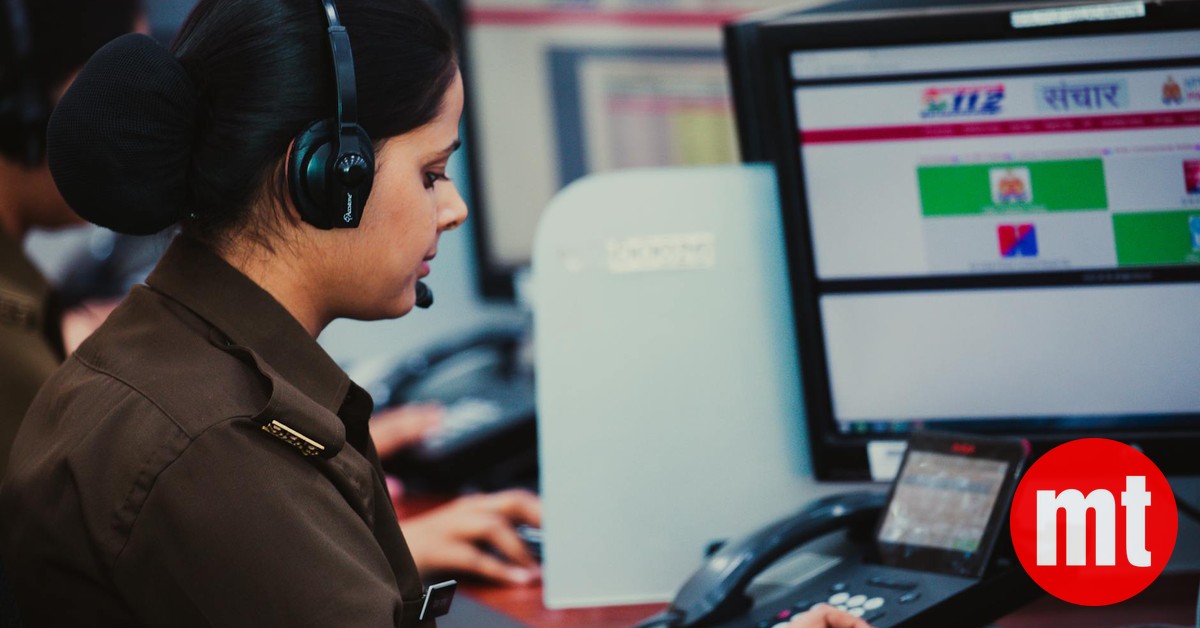
The dominant industry narrative frames AI deployment as a headcount-reduction exercise, and that framing is strategically dangerous. AI-driven telecom customer service generates its highest returns not when it eliminates human agents, but when it reroutes agents toward high-complexity, high-emotion interactions — porting disputes, network outage compensation, and enterprise SLA breaches — where empathy and judgment remain irreplaceable. Operators that restructure their workforce into AI-augmented specialist roles consistently outperform those chasing pure automation ratios, according to Analysys Mason’s 2026 Asia-Pacific Contact Centre Benchmark study.
By The Numbers
- AI containment rate, Jio: ~68% of inbound contacts resolved without human transfer (India Mobile Congress 2026)
- Airtel Aria containment, postpaid billing: 82% in Q3 2026
- Cost-per-contact reduction: 35–45% reported by top-3 Indian operators using generative AI platforms (Analysys Mason, 2026)
- Multilingual AI coverage: 12 Indian languages now supported by leading telecom virtual assistants, up from 4 in 2026
AI-Driven Telecom Customer Service: What Must Happen Next
For AI-driven telecom customer service to sustain its momentum, the sector must resolve three critical gaps before they calcify into competitive liabilities. First, data governance frameworks governing the AI models need to be published transparently — subscribers and regulators alike are beginning to ask pointed questions about how conversation data is stored, used for model retraining, and protected under India’s Digital Personal Data Protection Act 2026. Second, interoperability standards between operator AI platforms and TRAI’s complaint management systems remain undefined, creating friction when disputes escalate to the regulator level.
Third, and most critically for long-term ROI, operators must invest in continuous model re-evaluation cycles tied to real network performance data. An AI agent resolving a query based on stale network status information does more reputational damage than no AI at all. The operators that will own subscriber loyalty through 2028 are those building closed feedback loops where every failed AI interaction automatically enriches the next training cycle — turning customer dissatisfaction from a liability into a learning asset at scale.
The Mobile Times Verdict
AI-driven telecom customer service has crossed the threshold from competitive differentiator to operational necessity in India’s market. The data is unambiguous: operators deploying mature, multilingual, context-aware AI platforms are reporting lower churn, faster resolution, and healthier margins in the same reporting periods. What this publication will watch closely through 2026 is whether the mid-tier and state-owned operators can close the capability gap before subscriber patience runs out. The window for catch-up is narrowing at the same pace that Jio and Airtel’s training data advantages compound. Move now, or concede the floor.
Sources: TRAI ↗ | COAI ↗ | GSMA ↗ India Mobile Congress 2026 operator presentations; Analysys Mason Asia-Pacific Contact Centre Benchmark Report 2026; TRAI Quality of Service Benchmarks (revised Q4 2026); Bharti Airtel Investor Relations Q3 FY2026; Digital Personal Data Protection Act 2026, Ministry of Electronics and Information Technology; Microsoft Azure OpenAI Service documentation; TCS BaNCS Contact Centre Platform whitepaper 2026.
Also read: How AI Is Reshaping Customer Service Across Indian Telecom