

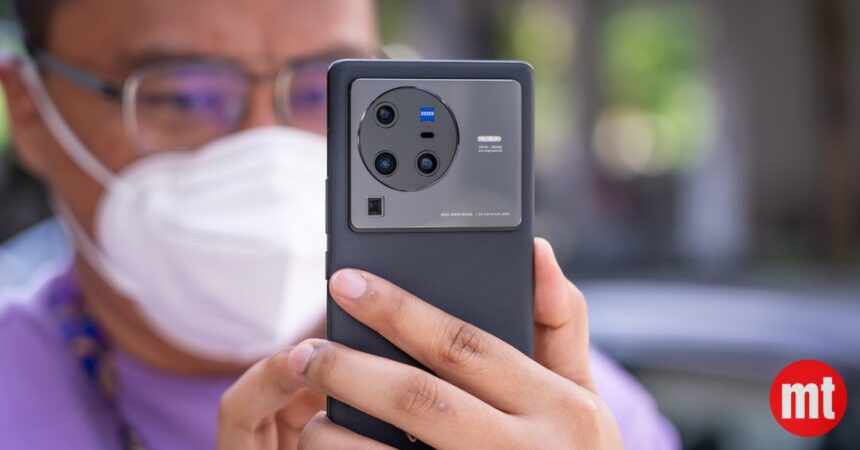
The Vivo Y500 4G launch arrives packing an 8,100mAh battery, one of the largest cells ever fitted into a mid-range Android phone targeting budget-conscious Indian buyers. Paired with an AMOLED display, the Y500 4G directly challenges the stamina-versus-screen quality trade-off that has frustrated shoppers in the sub-₹20,000 segment for years. Vivo is betting that Indian consumers who average over five hours of daily screen time will pay attention.
Quick Specs & Highlights
- 8,100mAh battery, one of the largest in its class
- India pricing and availability not yet officially confirmed for 2026
- AMOLED display at this price point, rare among direct rivals
- Global teaser phase underway; India debut expected in mid-2026
What Makes the Vivo Y500 4G Launch Stand Out From the Crowd
The Vivo Y500 4G launch centres on a spec combination that is genuinely uncommon at its expected price tier. An 8,100mAh cell promises multi-day endurance under moderate use, while the AMOLED panel delivers deeper blacks and sharper contrast than the LCD screens that still dominate budget handsets from brands like Realme and Infinix. Vivo has not yet published processor details or RAM configurations, but the display-plus-battery pairing alone positions the Y500 4G as a serious contender for students and first-time smartphone buyers across tier-2 and tier-3 Indian cities.
Why Is the Vivo Y500 4G Launch a Real Threat to Rivals in 2026?
The Vivo Y500 4G launch squares off against the Samsung Galaxy A06 5G, the Realme C65, and the Redmi 14C, all of which hover in the ₹10,000 to ₹15,000 band. Samsung’s A06 5G offers a 5G modem but sticks with a PLS LCD screen. Realme’s C65 carries a 5,000mAh battery, barely 62 percent of the Y500 4G’s capacity. On raw endurance and display quality alone, Vivo holds a clear edge over both competitors, assuming the final India price stays competitive within that bracket.
Power users who stream video heavily, students living away from reliable charging points, and small business owners who cannot afford mid-day battery anxiety form the Y500 4G’s natural audience. The AMOLED screen makes colour-accurate content consumption genuinely enjoyable, which matters to a demographic increasingly watching OTT platforms on their phones. Vivo’s offline retail strength across states like Uttar Pradesh, Maharashtra, and Tamil Nadu gives the handset a distribution advantage that purely online-first brands like Poco struggle to match at launch.
“A sub-₹15,000 phone with an AMOLED display and a battery above 7,000mAh is exactly what the Indian value segment has been waiting for. Vivo’s execution at this price point will define whether it can claw back share from Redmi in 2026.” — Market Analyst
Availability & Verdict
Vivo has begun global teaser activity for the Y500 4G but has not locked in an official India launch date or retail price as of early 2026. Based on the Y-series pricing pattern, expect a figure between ₹12,000 and ₹16,000 when the handset reaches Indian shelves. The Vivo Y500 4G launch makes strong sense for buyers who prioritise battery life and screen quality over 5G connectivity. Shoppers who need 5G futureproofing should wait for a confirmed 5G variant or consider the Redmi 14C 5G instead.
Sources: ITU ↗ | TRAI ↗ | Ericsson ↗ Gadgets360 — Vivo Y500 4G Global Launch Teased
People Also Ask
- What is the battery capacity of the Vivo Y500 4G? The Vivo Y500 4G launch confirms an 8,100mAh battery, making it one of the highest-capacity cells in the budget Android segment and capable of multi-day endurance under typical Indian usage patterns.
- Does the Vivo Y500 4G have an AMOLED display? Yes. The Vivo Y500 4G launch is confirmed to feature an AMOLED panel, which is a notable upgrade over the LCD screens found in most competing handsets at a similar price point in India.
- When will the Vivo Y500 4G launch in India? Vivo has started global teasers but has not announced an official India release date. Based on current teaser activity, an India debut is expected sometime in mid-2026, with pricing likely between ₹12,000 and ₹16,000.