


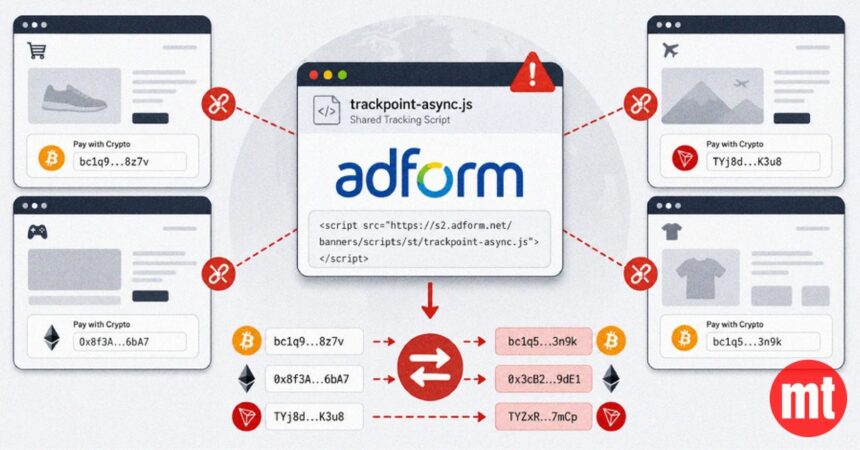
A crypto wallet malware attack hit advertising technology giant Adform on July 27, 2026, silently rewriting Bitcoin and cryptocurrency wallet addresses inside a poisoned JavaScript file served across hundreds of client websites. Adform detected the breach the same day, stripped the malicious code, and alerted affected clients. Any user who copied a crypto wallet address while visiting an infected site may have sent funds directly to attackers.
What You Need To Know
- Adform’s JavaScript file was compromised on July 27, 2026, affecting all sites running the script that day
- Attackers used clipboard-hijacking to silently swap copied Bitcoin wallet addresses with attacker-controlled addresses
- Adform removed the malicious code the same day and reported the incident to law enforcement authorities
- Any crypto transaction completed via copy-paste on an affected site on July 27, 2026 should be treated as potentially redirected
How This Crypto Wallet Malware Attack Actually Worked
Attackers injected malicious JavaScript directly into an Adform-served script file, turning routine ad-tech delivery into a browser-side clipboard hijacker. When a user visited any website carrying the compromised script and copied a Bitcoin or cryptocurrency wallet address, the malware silently swapped it with an address controlled by the attackers. The victim saw nothing unusual. The substitution happened invisibly in the browser. Adform confirmed it detected the intrusion on July 27, 2026, immediately removed the code, notified impacted clients, and filed a report with relevant authorities.

Why India’s Crypto and Publisher Community Cannot Ignore This
India’s digital advertising sector runs heavily on third-party JavaScript tags from global ad-tech platforms including Adform. Publishers across Indian news portals, e-commerce platforms, and fintech sites routinely embed these scripts without auditing their contents. Any Indian site running Adform’s affected script on July 27, 2026 would have exposed its visitors to the same clipboard-swapping crypto wallet malware. With India’s crypto user base crossing 20 million active wallets in 2026, the potential financial damage from even a few successful transaction redirections is significant.
The attack exposes a systemic weakness in how the digital advertising supply chain handles third-party script integrity. Indian publishers almost never implement Subresource Integrity checks on externally hosted JavaScript. A poisoned file from a trusted vendor bypasses every firewall and antivirus running on the end user’s device. The browser simply executes what the ad-tech server delivers. For fintech platforms and crypto exchanges that rely on display advertising to monetise traffic, a single compromised ad-tech vendor now represents a direct threat to their users’ funds.
“Third-party JavaScript is the most underestimated attack surface in digital publishing. One poisoned file from a trusted vendor reaches millions of users instantly, and most site owners have no real-time visibility into what that code is actually doing in the browser.” — Cybersecurity Analyst, Digital Advertising Sector
What Should Website Owners and Crypto Users Do Right Now?
Website operators using Adform should immediately audit their tag deployments and confirm they are running the clean, post-incident version of the script. Any platform that processes cryptocurrency transactions must alert users who visited on July 27, 2026 to verify wallet addresses for all transactions completed that day. Crypto wallet malware of this clipboard-hijacking variety leaves no visible trace for the end user. Independent security firms recommend publishers adopt real-time script monitoring tools and enforce Content Security Policies to detect unauthorised code changes before users are exposed. Adform’s investigation is ongoing.
Sources: TRAI ↗ | DOT ↗ | COAI ↗ The Hacker News, August 2026; Adform Security Disclosure, July 27, 2026.
People Also Ask
- What is crypto wallet malware and how does it steal funds? Crypto wallet malware intercepts cryptocurrency wallet addresses copied to a user’s clipboard and replaces them with attacker-controlled addresses. The victim unknowingly sends funds to the attacker when completing a transaction, with no visible warning.
- How did the Adform JavaScript attack spread across so many websites? Adform supplies a single JavaScript file loaded by hundreds of publisher websites. Attackers modified that central file, so every site pulling the script automatically served the malicious code to all visitors without any individual site being directly compromised.
- How can users protect themselves from clipboard-hijacking malware in 2026? Always manually type wallet addresses or use QR codes instead of copy-pasting. Before confirming any crypto transaction, double-check the destination address character by character. Browser extensions that monitor clipboard activity can also flag unexpected address substitutions in real time.