


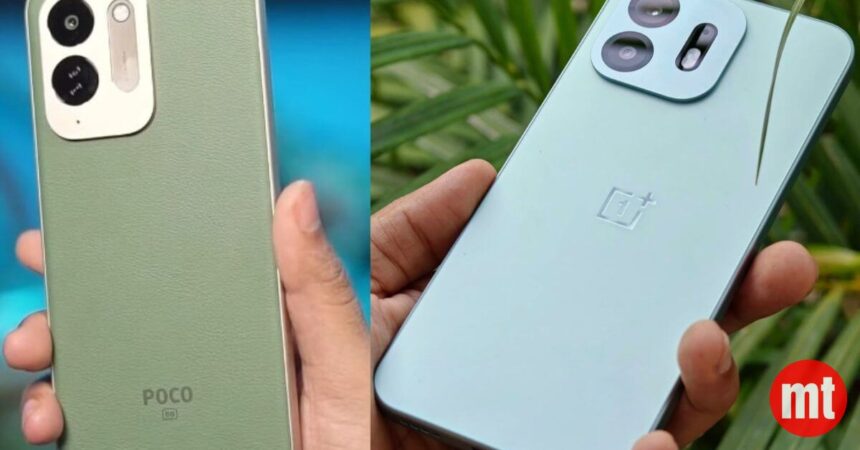
The Poco M8x vs OnePlus N6 debate has Indian buyers split, and the deciding factor is a 6,000mAh battery on the Poco M8x against the OnePlus N6’s cleaner software promise at a similar price point. Both phones launched in August 2026 targeting the fiercely competitive Rs 15,000 to Rs 20,000 segment. For millions of first-time 5G upgraders across Tier 2 and Tier 3 cities, picking the wrong one means living with that choice for the next two years.
Quick Specs & Highlights
- Poco M8x 5G: 6,000mAh battery, Snapdragon 4s Gen 2, 50MP primary camera
- OnePlus N6 5G: Dimensity 6300, 5,500mAh battery, OxygenOS 15 out of the box
- Poco M8x starts at Rs 14,999; OnePlus N6 opens at Rs 15,999 in India
- Both available on Flipkart and the respective brand stores from August 2026
What Makes the Poco M8x vs OnePlus N6 a Genuinely Hard Call
The Poco M8x vs OnePlus N6 matchup is difficult precisely because both phones refuse to have an obvious weak spot. Poco’s M8x packs a 6,000mAh cell, making it one of the largest batteries in its price bracket, backed by a Snapdragon 4s Gen 2 chipset that Qualcomm positions specifically for affordable 5G. The 50MP main sensor with an f/1.8 aperture handles daylight shots adequately. OnePlus counters with the Dimensity 6300, a 90Hz AMOLED panel, and OxygenOS 15, which promises 3 years of OS updates, a genuine rarity under Rs 16,000.

Poco M8x vs OnePlus N6 vs The Competition: Where Does Value Really Sit?
Stack the Poco M8x vs OnePlus N6 against the Redmi Note 14 5G and Samsung Galaxy M16 5G, and the picture sharpens fast. The Redmi Note 14 5G at Rs 13,999 undercuts both on price but delivers a smaller 5,110mAh battery and no AMOLED screen. Samsung’s Galaxy M16 5G offers a 50MP triple-camera array yet runs One UI 7 on slower Exynos silicon. Neither rival matches the OnePlus N6’s software longevity commitment or the Poco M8x’s raw endurance advantage simultaneously.
The Poco M8x suits students and daily commuters in cities where charging points are scarce. Its massive battery means a full day of YouTube, Instagram Reels, and UPI payments without reaching for a cable. The OnePlus N6 targets buyers who hate bloatware and want a phone that still feels current in 2028. If you stream content on a decent display and care about long-term OS support, OnePlus wins that argument. Gamers on a tight budget will lean Poco purely for thermal headroom and Snapdragon’s gaming reputation at this tier.
“The sub-Rs 16,000 5G segment is growing at roughly 34 percent year-on-year in India, and phones like these will define brand loyalty for the next upgrade cycle. Software support duration is becoming as important a spec as RAM for this buyer demographic.” — Market Analyst, IDC India
Availability & Verdict
Poco M8x vs OnePlus N6 comes down to one honest question: battery life or software life? The Poco M8x 5G starts at Rs 14,999 for the 6GB plus 128GB variant and is available on Flipkart with early-bird bank discounts running through August 2026. The OnePlus N6 5G opens at Rs 15,999 on the OnePlus India website and Amazon. Buyers who drain their phone before dinner should buy the Poco. Buyers who want three years of security patches without hunting for custom ROMs should buy the OnePlus N6.
Sources: TRAI ↗ | ITU ↗ | COAI ↗ TelecomTalk: Poco M8x 5G vs OnePlus N6 5G
People Also Ask
- Which has a better battery, the Poco M8x or the OnePlus N6? The Poco M8x 5G carries a larger 6,000mAh battery compared to the OnePlus N6 5G’s 5,500mAh cell. For heavy users who cannot charge frequently, the Poco M8x offers a clear endurance advantage at a lower starting price.
- Does the OnePlus N6 5G get more software updates than the Poco M8x? Yes. OnePlus commits to 3 years of OS updates and 4 years of security patches on the N6 5G. Poco has not announced an equivalent long-term support window for the M8x 5G as of August 2026.
- Which phone should you buy under Rs 16,000 in India in 2026? Buy the Poco M8x 5G if battery endurance is your top priority. Choose the OnePlus N6 5G if a cleaner software experience and long-term update support matter more to you than saving Rs 1,000 upfront.