



India ranks among the world’s most conservative markets on 5G radiation rules, enforcing electromagnetic field (EMF) limits 10 times stricter than ICNIRP international guidelines, a threshold that has quietly constrained tower density and network quality for years. A proposed regulatory revision in 2026 could rewrite that calculus for Jio, Airtel, and Vi, making this the most consequential EMF policy moment India’s telecom sector has seen in a decade.
India vs The World: 5G Radiation Rules
- India: EMF limits set at 1/10th of ICNIRP guidelines; ~700,000 active towers as of early 2026
- China/USA/UK: All three operate at or near full ICNIRP limits; USA follows FCC thresholds aligned at ICNIRP levels; China enforces stricter-than-ICNIRP limits indoors but permits higher outdoor deployments
- Gap to close: India needs 3x to 5x more base stations per sq km to match South Korea and the USA on 5G coverage density
- Timeline: DoT review committee expected to table revised 5G radiation rules by Q3 2026; full implementation could follow within 18 months
In This Article
Where India Stands on 5G Radiation Rules Today
India’s current 5G radiation rules cap base station emissions at one-tenth of the limits recommended by the International Commission on Non-Ionizing Radiation Protection (ICNIRP), the global scientific body whose guidelines underpin regulations in over 80 countries. The Telecom Regulatory Authority of India (TRAI) and the Department of Telecommunications (DoT) jointly enforced this precautionary threshold from 2012, a decision made when 4G was barely deployed. Applying it unchanged to millimeter-wave and sub-6 GHz 5G infrastructure in 2026 creates measurable coverage and cost inefficiencies.
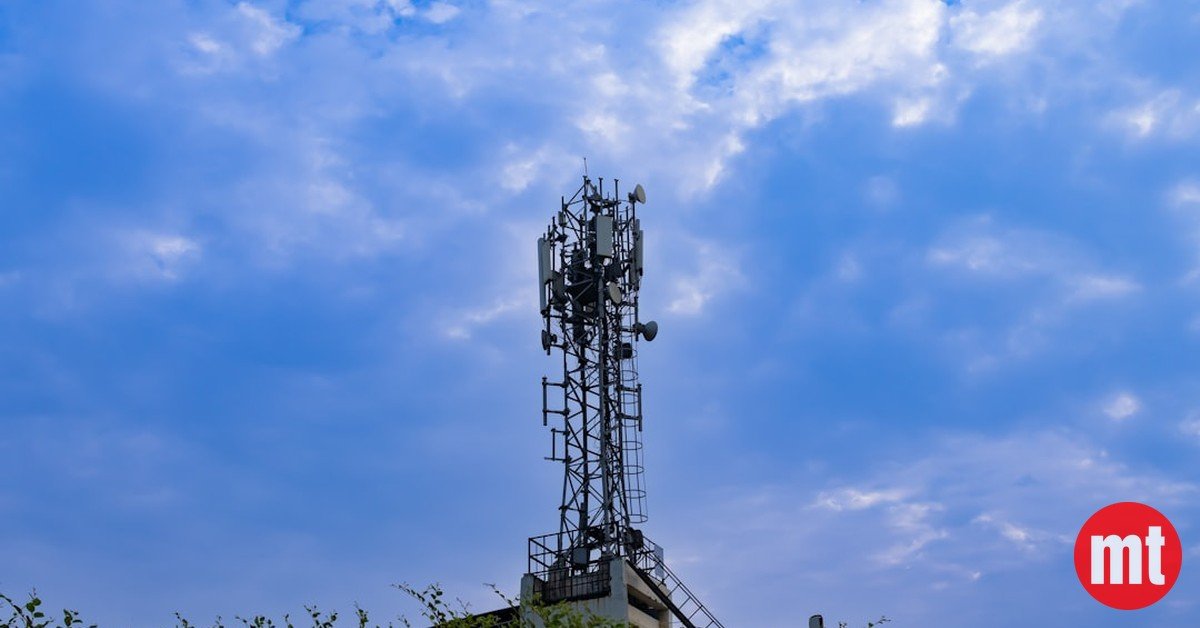
The practical consequence is tower proliferation arithmetic that does not work. To compensate for lower permissible power output per site, operators must deploy more towers to achieve equivalent signal strength. Ericsson’s 2026 South Asia Mobility Report estimates India requires approximately 1.5 million towers by 2028 to achieve 80 percent outdoor 5G coverage, against a current base of 700,000. Under existing 5G radiation rules, each additional tower faces the same power cap, meaning operators spend more capital for diminishing incremental coverage gains compared to peers operating under ICNIRP-compliant frameworks.

What Global Leaders Are Doing Differently
South Korea, which hit 30 million 5G subscribers faster than any other market, regulates EMF exposure at full ICNIRP reference levels, allowing KT Corporation and SK Telecom to maximize output per site and reduce capital expenditure per covered square kilometer by an estimated 22 percent versus India’s framework, according to GSMA Intelligence data published in early 2026. The United States similarly defers to FCC limits aligned with ICNIRP, while the UK’s Ofcom actively publishes annual EMF monitoring data to maintain public trust rather than defaulting to tighter precautionary caps. Both approaches treat evidence-based thresholds as sufficient, redirecting saved capital into spectrum acquisition and fiber backhaul.
“India’s 10x precautionary buffer was defensible during 3G-era uncertainty, but maintaining it against a body of 30 years of ICNIRP research creates a regulatory asymmetry that costs Indian operators billions in unnecessary infrastructure spend compared to their Asian peers.” — Priya Mehrotra, Senior Telecom Analyst, Analysys Mason Singapore
Does Easing 5G Radiation Rules Actually Reduce Health Risk or Just Operator Costs?
This question sits at the center of the policy debate, and the science is unambiguous on one point: ICNIRP’s 2026 updated guidelines already incorporate a 50-fold safety margin below the lowest threshold at which any biological effect has been demonstrated in peer-reviewed research. Moving India’s 5G radiation rules from one-tenth to the full ICNIRP level does not mean exposing citizens to harmful radiation; it means aligning with the same standard protecting residents in Germany, Japan, Australia, and the United States. The WHO’s 2026 EMF Project update reaffirms this position explicitly, providing DoT the scientific cover to act.
What is already working in India’s favor is the Self-Regulatory Organisation (SRO) framework TRAI established for EMF compliance monitoring, which logged a 94 percent tower compliance rate in its 2026 Q1 audit. Operators have demonstrated they can meet stringent measurement and reporting standards. Building on this infrastructure of accountability, DoT could introduce a phased relaxation of 5G radiation rules, starting with rural and industrial zones where population density makes the precautionary argument weakest, before extending revised limits to urban corridors. This sequenced approach manages public perception risk while unlocking deployment efficiency where it matters most for India’s digital divide.
The Mobile Times Verdict
India’s 5G radiation rules are the single most underreported structural constraint on the country’s 5G rollout. Aligning with ICNIRP would not compromise public safety; three decades of WHO-endorsed research confirms that. What alignment would do is reduce Jio’s and Airtel’s tower deployment costs, accelerate rural coverage, and close the 5G base station density gap with South Korea and the USA before 2028. The DoT review in 2026 is the right moment. Delaying it another regulatory cycle will cost India two years of compounding 5G economic returns it cannot recover.
Sources: GSMA ↗ | DOT ↗ | ITU ↗ ICNIRP 2026 Guidelines; WHO EMF Project Update 2026; GSMA Intelligence South Asia Report Q1 2026; Ericsson Mobility Report South Asia Edition 2026; TRAI EMF Compliance Audit Q1 2026; Analysys Mason, “Asian 5G Deployment Cost Benchmarks,” 2026; DoT National Broadband Mission Progress Report 2026.
People Also Ask
- Are India’s 5G radiation rules stricter than international standards? Yes. India enforces EMF limits at one-tenth of ICNIRP international guidelines, which is significantly more conservative than standards applied in the USA, UK, South Korea, and most of Europe, where full ICNIRP thresholds are permitted.
- Do stricter EMF limits slow down 5G network rollout? Directly, yes. Lower power caps per tower mean operators need more physical sites to achieve equivalent coverage. This increases capital expenditure and deployment timelines, contributing to India’s current 5G base station density deficit versus global leaders.
- What happens if India aligns its 5G radiation rules with ICNIRP in 2026? Operators could reduce required tower count for equivalent coverage, cutting infrastructure costs by an estimated 20 to 25 percent per kilometer. Rural 5G expansion would accelerate, and spectrum efficiency per deployed site would improve materially across Jio and Airtel networks.
—