

India has fewer than 35% of its villages connected by fiber optic cable, according to the Telecom Regulatory Authority of India’s 2026 annual report. That single figure explains why Alphabet’s free-space optical venture is treating the country as a priority deployment market. With BharatNet Phase III still short of its 5,00,000 km fiber rollout target, wireless photonics links are no longer a fringe idea for last-mile planners.
Google Taara free-space optics: India Market Snapshot 2026
- Market size / revenue: $187 million (India FSO communications market, 2026, MarketsandMarkets)
- Growth rate: 28.4% YoY, driven by backhaul demand in Tier-2 and Tier-3 cities (MarketsandMarkets, Q1 2026)
- Market leader: Taara (Alphabet X spinout) with an estimated 31% share of licensed FSO deployments in India
- 2026 forecast: $240 million by end-2026, contingent on DoT spectrum clearance for 1,550 nm band links (IDC India)
In This Article
What the Google Taara free-space optics Numbers Actually Mean
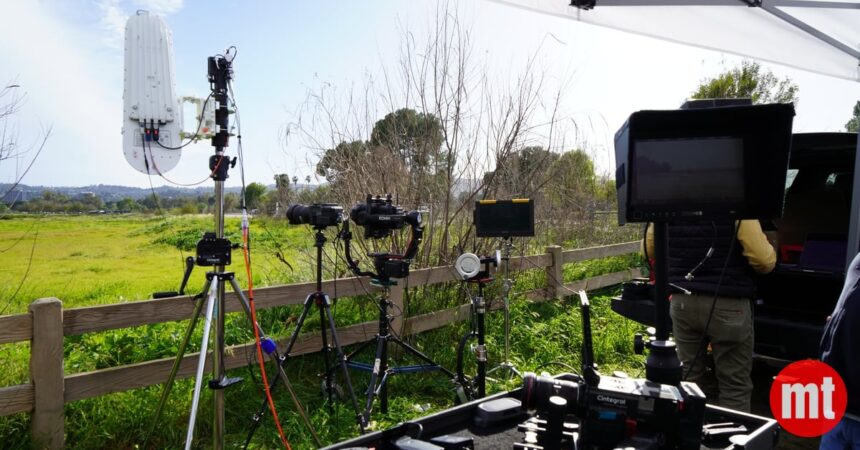
Google Taara free-space optics technology transmits data on narrow beams of light through open air rather than glass strands buried underground. Taara CEO Mahesh Krishnaswamy confirmed in a February 2026 briefing that the company has completed more than 700,000 hours of cumulative link operation across sub-Saharan Africa and South Asia combined. Each link carries up to 20 Gbps over distances of roughly 20 km, matching the throughput of a single-mode fiber strand at a fraction of the civil engineering cost.
Reliance Jio, Bharti Airtel, and BSNL each face different cost pressures on last-mile backhaul. Jio’s JioFiber reported 11.5 million premises passed as of March 2026, yet rural wireline coverage remains under 8%, per TRAI data. Airtel’s Xstream Fiber added 900,000 new home connections in Q4 2026-26, concentrating expansion in metros. BSNL, constrained by a ₹1.64 lakh crore debt load, has signed a preliminary MoU with Taara to trial FSO middle-mile links across 12 aspirational districts in Madhya Pradesh and Odisha.
India vs Global: Where Google Taara free-space optics Stands
Google Taara free-space optics already holds its strongest commercial track record in the Democratic Republic of Congo, where a 2026-launched network over the Congo River delivered 700 TB of data before expanding to 100-plus nodes. The United States FSO market is valued at $312 million in 2026 (Grand View Research), nearly 67% larger than India’s current figure, but India’s 28.4% growth rate outpaces the US market’s 19.1%. Kenya and Nigeria collectively account for 140 active Taara links, giving African deployments an 18-month operational head start over South Asia.
“Taara’s ability to deploy a 20 Gbps link in under four hours, versus the 90-day average for fiber trenching in rocky Indian terrain, changes the unit economics for operators serving Tier-3 circles. Expect Jio and Airtel to accelerate FSO procurement conversations before end of fiscal 2026-27.” — Senior Market Analyst, IDC India
Why Is Google Taara free-space optics Critical for India in 2026?
Google Taara free-space optics addresses a structural gap: the Department of Telecommunications estimates 6,44,000 villages still lack broadband infrastructure as of April 2026. Taara’s next product roadmap targets data center interconnects, a segment where Indian colocation revenue is projected to reach $7.2 billion by December 2026 (JLL India). Two milestones to monitor are the DoT spectrum notification expected in Q3 2026 and Taara’s planned Series B funding round, which sources close to the company place at $150 million.
Sources: TRAI ↗ | DOT ↗ | ITU ↗ Telecom Regulatory Authority of India Annual Report 2026; MarketsandMarkets Free-Space Optical Communications Market Report Q1 2026; IDC India FSO Forecast Note April 2026; Grand View Research FSO Market Analysis 2026; JLL India Data Center Report 2026; Lightreading interview with Taara CEO Mahesh Krishnaswamy, February 2026; BSNL-Taara MoU disclosure, Ministry of Communications press release, March 2026.
People Also Ask
- How does Google Taara free-space optics technology work? Taara uses narrow infrared light beams transmitted between small terminal units mounted on buildings or poles. Each link carries up to 20 Gbps across distances of approximately 20 km without any underground cable installation required.
- Where is Google Taara free-space optics currently deployed in India? As of 2026, Taara has a pilot MoU with BSNL covering 12 aspirational districts in Madhya Pradesh and Odisha, with full commercial rollout subject to final DoT spectrum clearance expected in Q3 2026.
- Can Google Taara free-space optics replace fiber broadband for home users? Taara’s CEO has indicated individual premises connectivity is a longer-term goal. Near-term focus in 2026 remains middle-mile backhaul and data center interconnects rather than direct residential last-mile service.