


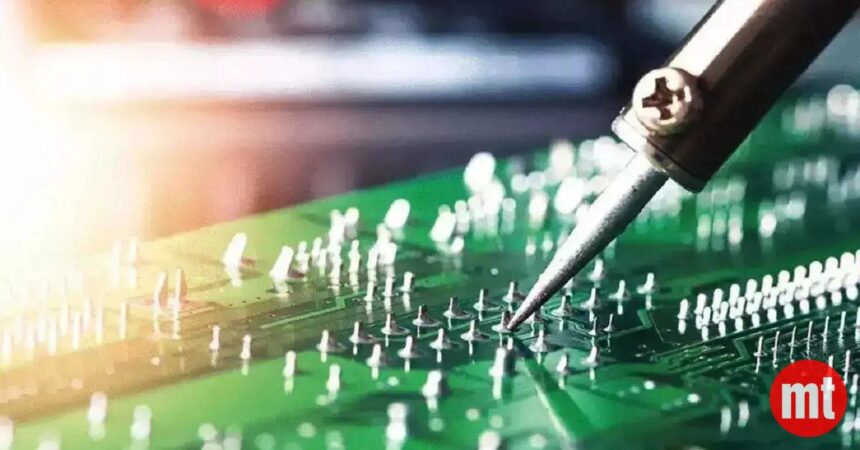
PCB Shortage Electronics Pricing Surges 18% as AI Chips Drain Global Supply
PCB shortage electronics pricing has become one of the most consequential supply chain stories of 2026, hitting everything from smartphones to routers at a moment when India’s electronics manufacturing sector is scaling fastest. A convergence of Red Sea shipping disruptions, spiralling raw material costs, and aggressive component diversion toward AI server hardware has tightened global PCB supply to levels not seen since the 2026 chip crisis. Prices on standard multi-layer boards have climbed roughly 18 percent in six months, forcing Indian OEMs and contract manufacturers to absorb costs or pass them downstream.
In This Article
The Deeper Story Behind PCB Shortage Electronics Pricing
What most coverage misses about PCB shortage electronics pricing is that this is not a single-cause event. Three independent stress points arrived simultaneously. First, Houthi attacks on Red Sea shipping lanes in late 2026 pushed freight lead times from Taiwan and South Korea to Indian ports past 40 days, up from 22. Second, epoxy resin and copper foil prices, the two primary input materials in PCB fabrication, rose 23 percent and 31 percent respectively through early 2026, driven by energy costs and concentrated supplier bases in China. Third, AI server demand created a gravitational pull on high-layer-count PCBs that pulled capacity away from consumer-grade orders.
India has seen component-driven inflation cycles before. During the 2G-to-3G transition in 2011 and 2012, a shortage of baseband processor chipsets delayed handset launches from Micromax and Karbonn by two to three quarters, briefly ceding ground to imported Chinese devices. The PCB crunch of 2026 carries a structural resemblance: a hardware platform constrained at the fabrication level, not the design level, meaning no software fix or product redesign can work around it. Indian manufacturers face the same ceiling whether they build feature phones or Wi-Fi 7 routers.
The Signal In The Noise
- AI accelerator boards use 16-to-24 layer PCBs; consumer smartphones use 8-to-10 layers, but they compete for the same copper-clad laminate raw material, so a GPU order at TSMC indirectly taxes a Realme phone build at Dixon Technologies.
- India’s PLI-linked electronics manufacturers face a contractual trap: production targets are fixed in their PLI agreements, but input cost overruns are not reimbursable, squeezing margins without any exit clause.
- PCB fabrication capacity in India remains below 10 percent of domestic demand, meaning nearly all board imports are dollar-denominated and directly exposed to both freight inflation and currency risk simultaneously.
- Most analyst models assume the Red Sea disruption is temporary, but insurance premiums on that corridor have not normalised since November 2026, suggesting the shipping industry itself is pricing in a prolonged disruption.
What This Means for PCB Shortage Electronics Pricing in India
For Indian OEMs, PCB shortage electronics pricing pressure is arriving at the worst possible moment. Dixon Technologies, Optiemus Infracom, and Padget Electronics are all running near full capacity under PLI commitments tied to the government’s ₹41,000 crore electronics incentive scheme. Dixon’s management flagged input cost volatility in its Q3 2026 investor call, noting that PCB procurement lead times had stretched to 60-plus days for some router and wearable SKUs. Brands like boAt and Noise, which source fully assembled or semi-knocked-down units, are now evaluating price revisions of 6 to 9 percent on their sub-₹3,000 TWS earbuds, a segment where even a ₹200 hike triggers visible consumer churn, according to GfK India retail data.
Why Is the AI Boom Making Indian Electronics More Expensive in 2026?
Nvidia’s H100 and the newer B200 GPU boards each require between 3,000 and 5,000 square centimetres of high-density interconnect PCB surface area. With hyperscalers ordering tens of thousands of such units monthly, Taiwanese fabricators like Tripod Technology and TTM Technologies have rebalanced their capacity allocations heavily toward data-centre orders, which carry 40-to-60 percent gross margins versus 15-to-20 percent on consumer PCBs. The volume that once filled consumer electronics orders now fills AI infrastructure orders. Indian importers sit at the bottom of that priority queue, with smaller order sizes and shorter contract durations offering fabricators little incentive to prioritise them.
The Road Ahead
PCB shortage electronics pricing relief is unlikely before Q1 2027 at the earliest, based on current capacity expansion timelines at major Taiwanese and Chinese fabricators. India’s own PCB push under the Scheme for Promotion of Manufacturing of Electronic Components and Semiconductors needs at minimum 18 to 24 months before new domestic fab capacity reaches commercial scale. In the short term, brands with stronger balance sheets, such as Samsung India and Apple’s Foxconn-Tata supply chain, will weather procurement squeezes better than domestic-only players. Smaller Indian OEMs should expect margin compression of 200 to 350 basis points through the rest of 2026.
People Also Ask
- Why is PCB shortage electronics pricing rising in India in 2026? PCB shortage electronics pricing is rising because of three simultaneous pressures: Red Sea shipping disruptions increasing freight lead times, copper and resin raw material cost inflation of up to 31 percent, and AI server manufacturers diverting fabrication capacity away from consumer-grade board production.
- Which Indian electronics brands are most affected by the PCB shortage in 2026? Dixon Technologies, boAt, Noise, Optiemus Infracom, and Padget Electronics face the sharpest impact. PLI production commitments mean these companies cannot slow procurement, forcing them to absorb higher costs or raise retail prices by 6 to 9 percent on select SKUs.
- When will PCB supply and pricing normalise for consumer electronics? Industry capacity expansion timelines suggest no meaningful relief before Q1 2027. New domestic Indian fabrication capacity under the SPECS scheme requires 18 to 24 additional months to reach commercial volumes sufficient to offset current import dependency.