


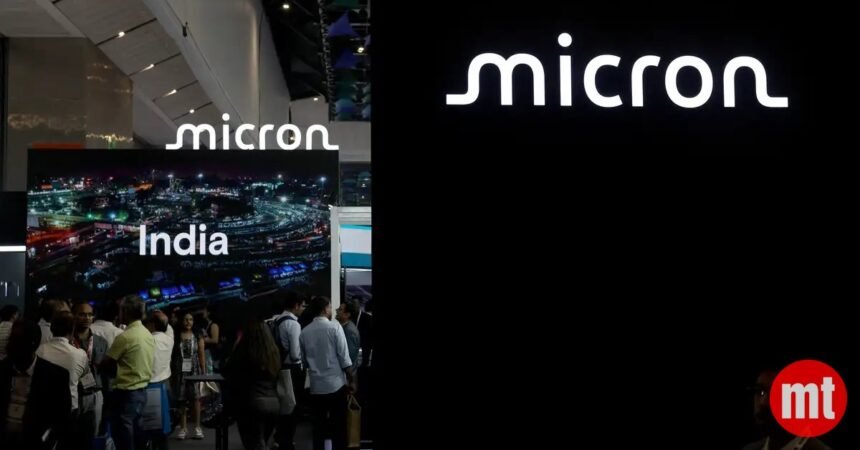
Micron semiconductor India operations are set to scale multifold in 2026, marking one of the most significant expansions in the country’s young but fast-moving chip manufacturing sector. CEO Sanjay Mehrotra confirmed the scale-up at the company’s Gujarat assembly and testing unit, signaling that India has crossed from policy announcements into actual production capacity. For Indian consumers, this means domestically assembled memory chips could power the next generation of affordable smartphones and laptops sold here.
Quick Specs & Highlights
- Multifold scale-up of chip assembly and testing capacity planned for 2026
- Facility located in Sanand, Gujarat, backed by India’s semiconductor incentive scheme
- Focuses on DRAM and NAND flash memory chips used in smartphones, PCs, and data centres
- Scale-up announcement made by CEO Sanjay Mehrotra, confirming execution has begun
What Makes Micron Semiconductor India’s Gujarat Facility a Turning Point
Micron semiconductor India operations began at the Sanand plant in Gujarat under the government’s semiconductor incentive program, which offers up to 50 percent fiscal support on project costs. The facility handles assembly, testing, marking, and packaging of memory chips, known in the industry as ATMP operations. Mehrotra told reporters that India has moved from vision to execution, a pointed reference to how quickly the policy framework translated into a functioning production site. Sanand now stands as one of the few active semiconductor facilities on the subcontinent.
Why Is Micron Semiconductor India Critical for the Local Supply Chain in 2026?
Micron semiconductor India competes indirectly with Samsung’s existing memory supply chain and SK Hynix’s growing Asia footprint, both of which ship chips into India primarily from South Korea and China. A locally assembled chip carries shorter logistics timelines, lower import duties under certain conditions, and greater supply resilience during geopolitical disruptions. Micron’s Gujarat output targets DRAM modules and NAND flash storage used in budget-to-mid-range Android phones, the segment that drives over 70 percent of India’s annual smartphone shipments.
Indian handset brands like Lava, Micromax, and contract manufacturers supplying Xiaomi and Realme stand to benefit most from a domestic memory chip source. Procurement officers at these firms currently book chips quarters in advance due to import lead times. A Gujarat-based Micron facility could cut that cycle significantly, giving smaller brands more flexibility to respond to demand spikes during festive sales seasons without overstocking imported inventory.
“India’s semiconductor push is no longer a roadmap document. Micron’s scale-up confirms that assembly capacity is being built at speed, and that will have a real knock-on effect on component pricing for device makers operating in the sub-₹15,000 phone segment.” — Senior Semiconductor Analyst, Counterpoint Research
Availability & Verdict
Micron semiconductor India chips from the Sanand plant are not sold directly to consumers. Output feeds into the B2B supply chain, reaching Indian device makers and global OEMs that assemble products locally. The multifold scale-up expected through 2026 does not carry a public capacity number yet, but Mehrotra’s statement aligns with Micron’s broader $825 million committed investment in the facility. For the Indian market, the verdict is straightforward: domestic chip supply is becoming real, not theoretical, and that benefits everyone buying a phone or laptop assembled in India.
Sources: TRAI ↗ | COAI ↗ | Ericsson ↗ Economic Times
People Also Ask
- What does Micron semiconductor India produce at its Gujarat plant? The Sanand facility conducts assembly, testing, marking, and packaging of DRAM and NAND flash memory chips. These components are used in smartphones, laptops, and data centre servers sold across India and globally.
- How much has Micron invested in its India semiconductor facility? Micron has committed approximately $825 million to its Sanand, Gujarat plant. The Indian government supports the project through its semiconductor incentive scheme, covering up to 50 percent of eligible project costs.
- Will Micron semiconductor India’s expansion lower phone prices in India? Not directly or immediately, but local chip assembly reduces import costs and lead times for device makers. Over time, that can translate into competitive pricing on memory-intensive smartphones in the ₹10,000 to ₹20,000 range.