


The India telecom market is one of the largest and fastest-growing telecommunications ecosystems in the world, generating an estimated ₹3.1 lakh crore (approximately USD 37 billion) in total revenue in 2026. With over 1.17 billion total subscribers and more than 900 million active wireless users, the India telecom market ranks second globally by subscriber base, trailing only China. This guide examines the market’s size, dominant operators, spectrum landscape, infrastructure depth, regulatory environment, and the disruptive arrival of satellite broadband players reshaping the India telecom market in 2026.
- Market Size and Revenue: How Big Is India’s Telecom Sector in 2026?
- Operator Landscape: Who Controls the India Telecom Market?
- Mobile Internet Penetration and ARPU Trends
- Spectrum, Towers, FDI Rules, and Satellite Entrants
- India Telecom Market Outlook: 2026 and Beyond
- Frequently Asked Questions: India Telecom Market
In This Guide
Key Facts: India Telecom Market
- Total wireless subscribers surpassed 900 million active users in 2026, according to TRAI subscriber reports.
- Reliance Jio — market leader with approximately 480 million subscribers and a revenue market share exceeding 42% as of 2026.
- 5G rollout reached over 700 cities across India by mid-2026, covering approximately 200 million users nationwide.
- India’s average mobile ARPU of ₹182 per month remains among the lowest in Asia-Pacific, compared to ₹800+ in Japan.
- The Indian government permits 100% FDI under the automatic route in telecom services following the 2026 Telecom Reforms, accelerating foreign investment flows.
Market Size and Revenue: How Big Is India’s Telecom Sector in 2026?
The India telecom market generated total revenues of approximately ₹3.1 lakh crore (USD 37 billion) in 2026, making it the third-largest telecom market globally by revenue, behind the United States and China. The sector contributes roughly 6.5% to India’s GDP and directly employs over 4 million people. Wireless services account for nearly 85% of total telecom revenues, with enterprise data services, broadband, and cloud communications driving incremental growth in the current fiscal cycle.
India’s total subscriber base — comprising mobile, broadband, and fixed-line users — crossed 1.17 billion connections in 2026. The Telecom Regulatory Authority of India (TRAI) — the apex sectoral regulator — reports that the monthly subscriber addition rate has stabilised at 4–6 million new connections, reflecting a maturing mass-market segment. Rural India now accounts for 44% of total wireless subscribers, up from 38% in 2026, signalling that geographic expansion into Tier-3 and Tier-4 markets remains a significant growth lever for operators competing in the India telecom market.
Operator Landscape: Who Controls the India Telecom Market?
The India telecom market in 2026 is effectively a three-player private oligopoly dominated by Reliance Jio, Bharti Airtel, and Vodafone Idea (Vi), alongside state-owned BSNL, which is undergoing a ₹89,000 crore government-backed revival. Reliance Jio — founded in 2016 and now the market’s unambiguous leader — held approximately 480 million subscribers as of Q1 2026. Bharti Airtel commands roughly 390 million subscribers, while Vi holds approximately 215 million, continuing to face financial and churn pressures despite government equity conversion support.
| Operator | Subscribers (Million) | Revenue Market Share | ARPU (₹/Month) | 5G Status (2026) |
|---|---|---|---|---|
| Reliance Jio | ~480 | ~42% | ₹195 | Pan-India SA 5G, 700+ cities |
| Bharti Airtel | ~390 | ~38% | ₹210 | NSA/SA 5G, 650+ cities |
| Vodafone Idea (Vi) | ~215 | ~17% | ₹148 | Limited 5G trials |
| BSNL | ~85 | ~3% | ₹95 | 4G rollout ongoing |
Airtel — India’s second-largest operator by revenue and the highest-ARPU private carrier at ₹210 per month — has strategically focused on premium postpaid and enterprise segments to distinguish itself from Jio’s mass-market pricing. The competitive dynamics of the India telecom market are increasingly shaped not by subscriber volume alone but by data monetisation, enterprise contracts, and the ability to bundle fixed wireless access (FWA), OTT content, and digital financial services into integrated consumer offers.
Mobile Internet Penetration and ARPU Trends
Mobile internet penetration in the India telecom market reached 62% of the total population in 2026, equivalent to approximately 880 million mobile internet users — a figure that places India second globally in absolute internet user count. The GSMA projects this penetration rate will climb to 74% by 2030, driven by affordable 4G and expanding 5G access. Average data consumption per smartphone user surpassed 25 GB per month in 2026, among the highest per-capita mobile data usage figures globally, largely attributable to Jio’s 2016 free-data disruption legacy.
India’s blended mobile ARPU of ₹182 per month in 2026 remains structurally low by global standards, yet it has risen meaningfully from ₹130 in 2026 following two rounds of across-the-board tariff hikes by Jio and Airtel in 2026. The India telecom market’s ARPU trajectory is critical: analysts at ICICI Securities estimate that operators need a blended ARPU of ₹250 to sustain 5G capital expenditure and achieve adequate returns on invested capital. Postpaid subscribers — who generate 3–4 times the ARPU of prepaid users — represent only 6% of India’s wireless base, indicating significant monetisation headroom.
“The India telecom market has achieved unparalleled scale — over 900 million mobile internet users — at price points the rest of the world cannot match; the defining challenge of 2026 is translating that scale into sustainable operator economics without sacrificing the digital inclusion that made India’s connected revolution possible.” — The Mobile Times Analysis
Spectrum, Towers, FDI Rules, and Satellite Entrants
India’s spectrum landscape was substantially reshaped by the landmark 2026 5G auction, which raised ₹1.5 lakh crore and assigned bands including 700 MHz, 3.5 GHz, and 26 GHz millimetre wave to operators. By 2026, cumulative assigned spectrum across all operators exceeds 12,000 MHz, with Jio holding the largest portfolio at approximately 1,850 MHz. The Department of Telecommunications (DOT) — the licensing and policy authority — is preparing a fresh spectrum auction for 2026 targeting additional mid-band 5G capacity in the 6 GHz band to meet surging enterprise and FWA demand.
By The Numbers: India Telecom Market
- Total Wireless Subscribers (2026): 900+ million active users (TRAI)
- Total Telecom Towers (2026): Approximately 780,000 towers operated by Indus Towers, ATC India, and others
- 5G Cities Covered (2026): 700+ cities across Jio and Airtel combined networks
- FDI Permitted in Telecom Services (2026): 100% under automatic route (post-2026 Reforms)
- Satellite Broadband Entrants (2026): Starlink (SpaceX), OneWeb (Eutelsat), and Jio SpaceFiber all commercially active
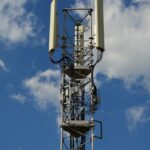
India’s tower infrastructure — the physical backbone of the India telecom market — comprises approximately 780,000 telecom towers in 2026, making it the second-largest tower market globally. Indus Towers — the world’s largest listed tower company — operates over 230,000 of these structures and serves all three private operators. On the satellite front, Starlink received its commercial licence from DOT in early 2026, joining OneWeb and Jio SpaceFiber in targeting India’s 60,000+ villages with poor terrestrial connectivity. Satellite broadband tariffs remain significantly higher than mobile broadband, but enterprise, maritime, and government use cases are driving early adoption in the India telecom market.
India Telecom Market Outlook: 2026 and Beyond
The India telecom market is projected to reach USD 55 billion in annual revenues by 2030, representing a compound annual growth rate of approximately 8.5%, according to projections from GSMA Intelligence and Analysys Mason. The primary growth drivers are 5G monetisation through enterprise use cases such as private networks, smart manufacturing, and precision agriculture; further ARPU expansion through mandatory tariff adjustments; and the deepening of digital financial services bundled with telecom plans across India’s vast rural base.
Regulatory and structural shifts will also define the India telecom market’s next chapter. TRAI’s ongoing consultations on net neutrality enforcement for satellite providers, the rollout of the Telecommunications Act 2026 replacing the colonial-era Indian Telegraph Act, and India’s push for homegrown 6G technology research through Bharat 6G Vision all signal a maturing policy ecosystem. With Vodafone Idea’s financial stability still uncertain and BSNL’s 4G rollout approaching completion, consolidation risk and competitive rebalancing remain the most consequential near-term variables for every stakeholder in the India telecom market.
Frequently Asked Questions: India Telecom Market
People Also Ask
- What is the total size of the India telecom market in 2026? The India telecom market generated approximately ₹3.1 lakh crore (USD 37 billion) in total revenues in 2026, making it the third-largest telecom market globally by revenue. It serves over 1.17 billion total subscriber connections and contributes roughly 6.5% to India’s GDP.
- Who is the largest telecom operator in India in 2026? Reliance Jio is the largest operator in the India telecom market in 2026, holding approximately 480 million subscribers and over 42% revenue market share. Jio operates a pan-India standalone 5G network and reported an ARPU of ₹195 per month in the most recent quarter.
- How does India’s mobile ARPU compare with other countries? India’s blended mobile ARPU of ₹182 per month (approximately USD 2.2) in 2026 is among the lowest in Asia-Pacific. By comparison, Japan’s ARPU exceeds ₹800, and the US average exceeds ₹2,000 per month, reflecting India’s price-sensitive, high-volume market structure.
- Is 5G available across India in 2026? Yes. Jio and Airtel together cover 700+ cities with 5G services in 2026, reaching approximately 200 million users. However, deep rural 5G coverage remains limited. BSNL is completing its 4G rollout before a planned 5G upgrade using indigenously developed technology.
- What FDI rules apply to the India telecom market in 2026? Following the Indian government’s 2026 Telecom Reforms, 100% foreign direct investment is permitted in Indian telecom services under the automatic route — meaning no prior government approval is required. This policy change significantly improved investor sentiment and capital inflows into the India telecom market.
Sources: TRAI ↗ | DOT ↗ | GSMA ↗
“`
—