

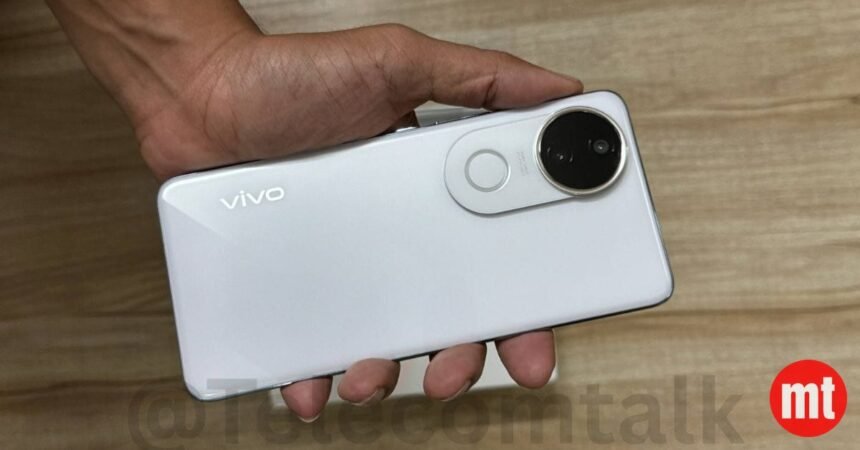
The Vivo iQOO price hike has pushed the Vivo T5x and select iQOO handsets to new price points in 2026, with revised tags taking effect across offline and online retail channels. Budget-segment buyers who had been eyeing these devices will need to recalculate their spending plans. The revision affects some of the most competitively priced 5G phones in India’s sub-₹15,000 bracket.
Quick Specs & Highlights
- Vivo T5x revised price: up by ₹500–₹1,000 across storage variants
- iQOO models also see upward revision effective mid-2026
- Both brands compete in India’s crowded ₹10,000–₹20,000 5G segment
- New prices live across Flipkart, Amazon India, and brand retail stores
What Triggered the Vivo iQOO Price Hike Across Both Brands
The Vivo iQOO price hike follows a broader cost-pressure trend hitting Chinese smartphone brands operating in India in 2026. Import duties on components, fluctuating rupee-yuan exchange rates, and revised GST compliance costs have all squeezed margins. Vivo has revised the T5x, one of its strongest-selling budget 5G devices, while iQOO has adjusted pricing on mid-range entries that compete directly with Redmi Note 14 and Realme Narzo 70 Pro. The revisions are modest but significant for value-sensitive Indian buyers.
Why Is the Vivo iQOO Price Hike a Problem for Budget 5G Buyers in India?
The Vivo iQOO price hike lands at a moment when rivals are holding prices steady or running aggressive exchange offers. Xiaomi’s Redmi Note 14 5G starts at ₹13,999, while Realme’s Narzo 70 Pro 5G sits at ₹14,999 with a 50MP Sony sensor. Vivo T5x, post-revision, inches closer to these rivals without meaningfully improving its spec sheet. For iQOO, the challenge is sharper since the brand built its identity around punching above its price point, and that equation weakens with every upward revision.
Buyers who prioritise battery life and display quality will find the Vivo T5x still competitive, given its 6,000mAh cell and 90Hz LCD panel. Students and first-time smartphone upgraders in Tier 2 and Tier 3 cities form the core audience for both brands in this segment. However, a ₹500–₹1,000 hike matters enormously in a price band where consumers compare every rupee. Shoppers on a strict budget may now shift attention to Poco M6 Pro or Samsung Galaxy M15 5G, which have held their price lines so far in 2026.
“In India’s sub-₹15,000 5G market, even a ₹500 price increase can shift purchase intent by 8–12 percentage points toward the next cheapest alternative. Brands like Vivo and iQOO cannot afford to lose that positioning even briefly.” — Market Analyst, IDC India
Availability & Verdict
The revised prices on Vivo T5x and affected iQOO models are live as of mid-2026 on Flipkart, Amazon India, and Vivo’s own website. The Vivo iQOO price hike is not catastrophic in absolute terms, but it narrows the value gap that made these phones worth recommending in the first place. If you already planned to buy, act before any further revision. New buyers should wait for the next sale window or consider Redmi Note 14 5G as a straight alternative until Vivo and iQOO respond with a spec upgrade or a corrective offer.
Sources: TRAI ↗ | ITU ↗ | DOT ↗ TelecomTalk — Vivo and iQOO Raise Price of their Phones in India
People Also Ask
- Why did Vivo and iQOO raise phone prices in India in 2026? The Vivo iQOO price hike is attributed to higher import duties on components, rupee-yuan exchange rate pressure, and revised GST compliance costs that have increased the total cost of bringing handsets to the Indian market.
- Which Vivo and iQOO phones got a price increase in 2026? Vivo revised pricing on the T5x budget 5G model, while iQOO adjusted select mid-range devices. Both brands operate in the highly competitive ₹10,000–₹20,000 5G segment where even small price changes affect buyer decisions significantly.
- Should I still buy a Vivo or iQOO phone after the price hike? If the revised price still fits your budget, both brands offer solid 5G hardware. Otherwise, consider Redmi Note 14 5G or Realme Narzo 70 Pro, which offer comparable specs at prices that have remained stable so far in 2026.