

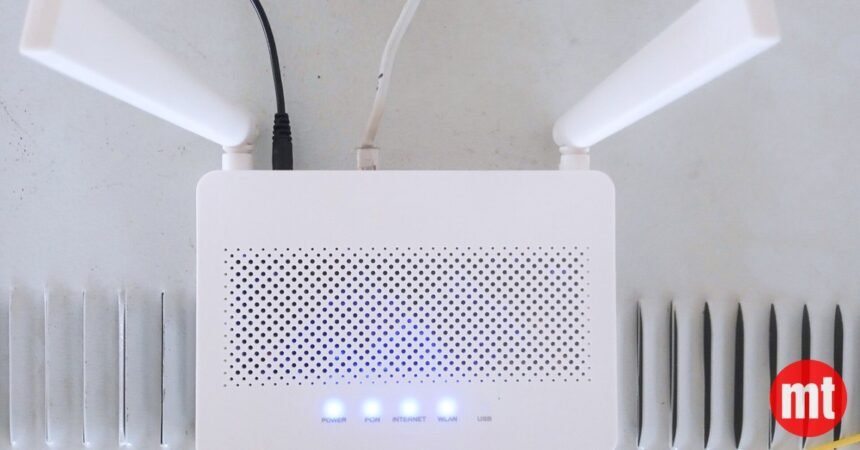
The Department of Telecommunications has changed the PM-WANI public Wi-Fi rules to add QR code login, short data packs of 15, 30 and 60 minutes, and a standard format for hotspot names.
The two circulars are dated May 22, 2026, and gave providers eight weeks to comply, MediaNama reported. India had about 4.1 lakh PM-WANI hotspots as of April 2026, far short of the target of 1 crore hotspots by 2022. Details are based on MediaNama and Indian Infrastructure.
What changed under PM-WANI
| Change | What it means |
|---|---|
| QR login | Connect a laptop or tablet by scanning a QR code with the WANI app on a logged-in phone |
| Short packs | Providers are advised to offer 15, 30 and 60-minute packs |
| Hotspot names | Formats such as PMWANI_AAAAAAA, PMWANI_2.4G_ or PMWANI_5G_ with a code for the aggregator |
| Data storage | User data kept for one year, with full logs stored in India |
No prices were set for the short packs. Providers decide those.
Why it matters
PM-WANI lets small operators, such as shops, offer public Wi-Fi by reselling broadband. It launched in 2020, but growth has been slow, and TRAI released a consultation paper on low deployment in April 2026. These changes try to make the service easier to use for travellers, students and commuters, who may want Wi-Fi for only a few minutes.
The QR option also removes a common hassle, as a second device no longer needs its own login. Fingerprint checks are optional for extra security. A clear name also makes genuine PM-WANI hotspots easier to recognise, although users should still be careful on public networks.
Why it matters for mobile shops
A shop can become a Public Data Office and sell Wi-Fi as an added service. Short packs suit places with passing customers, such as markets and bus stands. Before signing up, check the broadband cost, the aggregator’s terms and the data storage duties, because the shop’s aggregator must keep user records.
Correction (November 1, 2026): An earlier version mentioned 6,000 stations. We could not confirm that figure.