


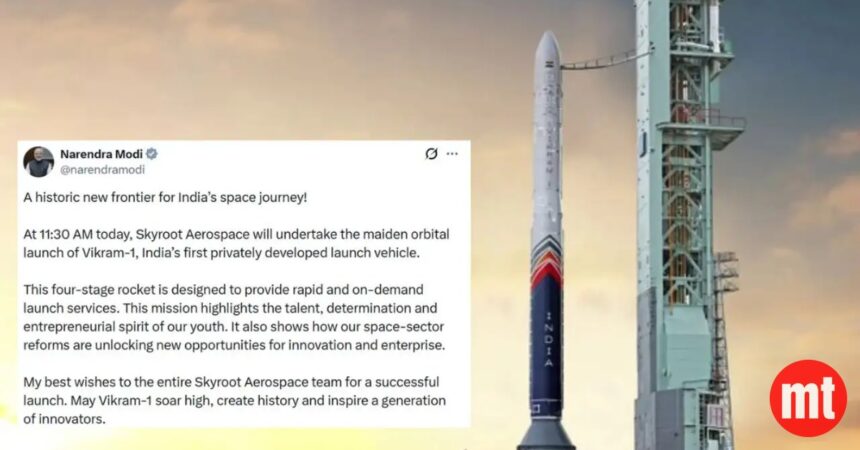
Skyroot Aerospace’s Vikram-1 orbital launch puts India’s private space sector on the global map in 2026. Prime Minister Narendra Modi called the attempt a historic new frontier for the nation. Vikram-1 is a four-stage rocket built by Skyroot to deliver rapid, affordable satellite launch services.
In This Article
Key Highlights
- Vikram-1 is a 4-stage rocket designed for rapid commercial satellite launches
- First private Indian company to attempt an orbital launch in history
- PM Modi praised India’s youth talent ahead of the milestone mission
Vikram-1 Launch: What Skyroot Is Attempting
Skyroot Aerospace is attempting the Vikram-1 orbital launch in 2026, becoming the first private Indian company ever to reach for orbit. The Hyderabad-based startup built Vikram-1 as a four-stage rocket capable of carrying small satellites at competitive turnaround times. Prime Minister Modi addressed the mission publicly, praising the talent of India’s youth and calling it a historic new frontier. The attempt signals a structural shift in how India builds and deploys space infrastructure.
Vikram-1 Mission’s Impact on India’s Private Space Race
The Vikram-1 orbital launch triggers a competitive new chapter for India’s commercial space sector. Until now, ISRO held a near-exclusive grip on Indian orbital missions. Skyroot’s attempt proves private capital and engineering talent can close that gap fast. Investors watching the new space sector globally will track this mission’s outcome closely. A successful Vikram-1 flight opens the door for other Indian startups like Agnikul Cosmos to accelerate their own orbital timelines through 2026 and beyond.
“India’s private launch vehicle segment is maturing faster than most markets anticipated. Skyroot clearing the orbital threshold would put the country in an exclusive club of nations with private orbital capability.” — Industry Analyst, Space Tech Sector
What Happens Next
All eyes stay on the launchpad as Skyroot’s Vikram-1 orbital launch countdown proceeds. A successful mission confirms Skyroot as a commercially viable launch provider and will likely unlock the next round of institutional funding. ISRO’s IN-SPACe regulatory body will evaluate flight data to fast-track future private launch approvals. Rival startups and satellite operators across Asia will recalibrate deployment strategies depending on the outcome Skyroot delivers in 2026.
Sources: GSMA ↗ | DOT ↗ Times of India
People Also Ask
- What is Skyroot Aerospace’s Vikram-1 rocket? Vikram-1 is a four-stage commercial launch vehicle built by Hyderabad-based Skyroot Aerospace, designed to deploy small satellites into orbit with fast turnaround times.
- Why is the Vikram-1 launch historically significant? Skyroot Aerospace is the first private Indian company to attempt an orbital launch, marking a milestone for India’s commercial space industry independent of ISRO.
- What happens if Vikram-1 successfully reaches orbit? A successful mission would position Skyroot as a credible commercial launch provider, accelerate funding rounds, and push rival Indian space startups to fast-track their own orbital programs.