


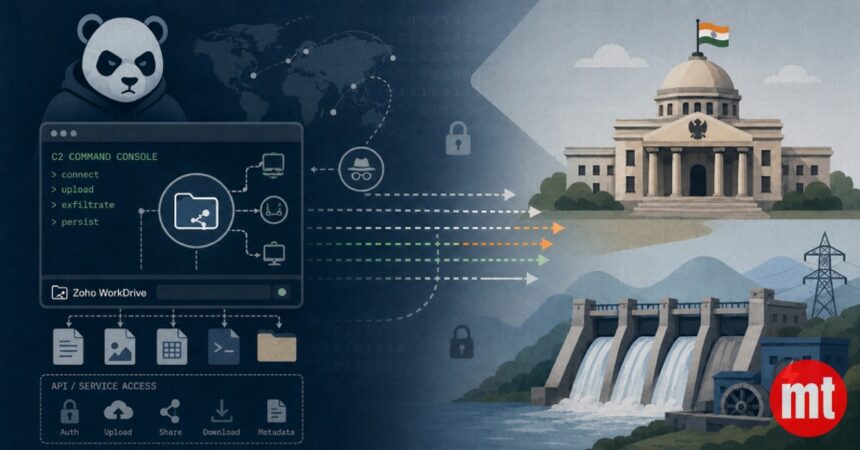
China-aligned hacking group Mustang Panda ran two espionage campaigns against Indian government networks and hydropower targets in June 2026, and used Zoho WorkDrive to hide its activity, researchers at Acronis have said.
Acronis attributes the attacks to the group with high confidence and says the aim was intelligence on India’s hydropower plans and its defence ties with Taiwan. The Hacker News reported that active communication with the malware ran from June 12 to June 22, and that CERT-In worked with Acronis on notification and clean-up. Details are based on The Hacker News.
How the two campaigns worked
| Campaign 1 | Campaign 2 | |
|---|---|---|
| Lure | Hydropower cooperation proposal | Agreement between Indian and Taiwanese institutions |
| Program abused | Solid PDF Creator | Citrix Receiver |
| Delivery | ZIP file, believed to be spear-phishing | ZIP file, believed to be spear-phishing |
Why Zoho WorkDrive matters
One implant, ZOHOMURK, carried hardcoded Zoho login credentials and used an attacker-controlled WorkDrive account like a dead drop. It read commands from one folder and left stolen data in another. Because that traffic looks like normal cloud use, it is harder to spot inside a network. The report did not include a response from Zoho.
The attackers also used a loader called SHARDLOADER and a reworked Toneshell backdoor called MINIRECON. Machines used by senior administrative staff were among the targets. There is no patch to install, because this abuses trusted programs rather than a software bug. Acronis advises organisations to watch for geopolitical lures, and to flag programs that call cloud services with no clear reason.
What ordinary users and shops should take from it
This campaign was aimed at government and energy targets, not at mobile users or retailers. The method is still worth knowing. A ZIP file that looks like an official document can install malware, and an email or WhatsApp attachment deserves the same caution. Do not open unexpected files on the computer you use for billing or banking.