

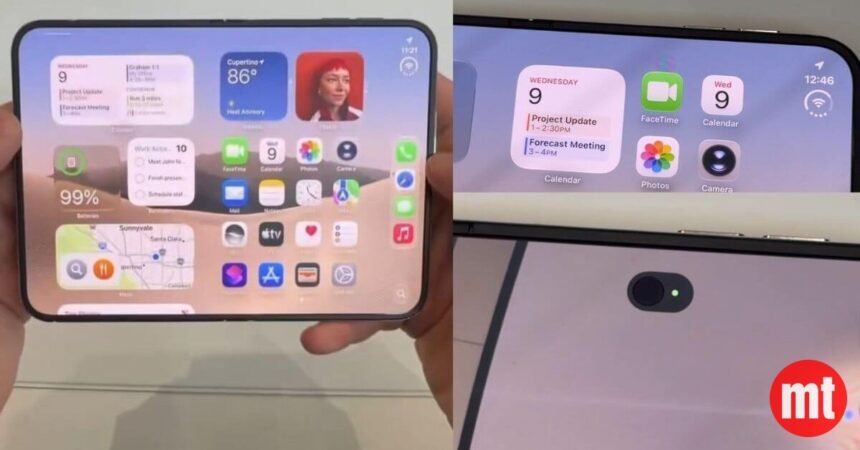
The Apple Samsung display partnership now runs on Samsung’s M16 OLED panel, powering the screens on Apple’s latest iPhone duo with brighter output, thinner profiles, and improved power efficiency over the previous M15 generation. For Indian buyers spending upward of ₹89,900 on a flagship iPhone, knowing exactly what drives that display quality matters. Samsung Display Co., Ltd. has locked in a three-year supply agreement with Apple, making this one of the longest-running OLED procurement deals in smartphone history.
Quick Specs & Highlights
- Samsung M16 OLED panels with improved luminance and thinner form factor vs M15
- iPhone duo starting from ₹89,900 in India across Apple retail and authorised resellers
- Three-year exclusive supply contract between Apple and Samsung Display Co., Ltd.
- Panels already shipping; iPhones available in India as of early 2026
What Makes the Apple Samsung Display Technology Stand Out in 2026
The Apple Samsung display arrangement centres on Samsung Display’s M16 OLED stack, which delivers measurably higher peak brightness and a thinner panel structure compared to the M15 used in prior iPhone generations. Samsung Display engineers reduced the number of organic layers without sacrificing colour accuracy, which directly cuts down on battery drain during high-brightness usage. For Indian consumers who frequently use their phones outdoors under harsh sunlight, that peak brightness improvement is one of the most practical spec upgrades in the new iPhones this year.
Apple Samsung Display vs What Rivals Are Offering Right Now
The Apple Samsung display setup competes directly with the LTPO OLED panels found on the Samsung Galaxy S25 series and the BOE OLED used inside select OnePlus 13 units. Samsung’s own Galaxy S25 Ultra uses an M13-derived panel from Samsung Display, meaning Apple’s iPhones technically run a newer generation of Samsung OLED than Samsung’s own flagship phones. BOE, which supplies Google Pixel 9 displays and some OnePlus models, has not publicly announced an M16-equivalent product, leaving Samsung Display ahead on panel generation for 2026 flagship devices.
Indian buyers choosing between a new iPhone and a Galaxy S25 Ultra at similar price points will find both use Samsung Display panels, but the M16 generation in the iPhone offers a generational efficiency advantage. Power users who stream high-resolution content for hours, or mobile gamers who push brightness to maximum, will notice fewer thermal throttling events and better sustained brightness on the M16-equipped iPhones. Photography-focused buyers who prefer Google Pixel 9 Pro’s camera system should note that Pixel’s display supply chain remains a mixed BOE and Samsung arrangement, without the consistency of a locked three-year contract.
“A three-year supply agreement of this scale signals that Apple has essentially locked Samsung Display into its roadmap through at least 2028, which means panel quality will remain consistent across multiple iPhone generations rather than fluctuating with annual supplier negotiations.” — Display Industry Analyst, TechArc Research
Availability & Verdict
The Apple Samsung display-equipped iPhones are available now across Apple’s India website, Apple BKC in Mumbai, Apple Saket in Delhi, and authorised resellers including Reliance Digital and Croma. Pricing starts at ₹89,900 for the base model and goes up to ₹1,59,900 for the top-tier configuration. Given that the M16 OLED represents a genuine generational improvement over last year’s panel, buyers who prioritise screen quality and outdoor visibility have a concrete hardware reason to upgrade rather than simply a software or camera justification.
Sources: TRAI ↗ | GSMA ↗ | DOT ↗ TelecomTalk — Apple Uses Samsung M16 OLED for iPhone Duo Displays
People Also Ask
- What is the Apple Samsung display deal about? Samsung Display Co., Ltd. has signed a three-year contract to supply Apple with M16 OLED panels for its latest iPhone duo. The M16 is Samsung’s newest OLED generation, offering higher brightness and better power efficiency than the previous M15 panel.
- Is the Apple Samsung display better than what Samsung uses in its own phones? Yes. Apple’s iPhones now use the M16 OLED generation from Samsung Display, while Samsung’s Galaxy S25 series runs on an older M13-derived panel. Apple effectively received Samsung’s newest commercial OLED technology before Samsung’s own flagship lineup.
- How long will Samsung supply displays for Apple iPhones? The current supply agreement between Apple and Samsung Display runs for three years, covering multiple future iPhone generations. The deal provides Apple with panel supply consistency and gives Samsung Display a guaranteed high-volume production commitment through approximately 2028.