


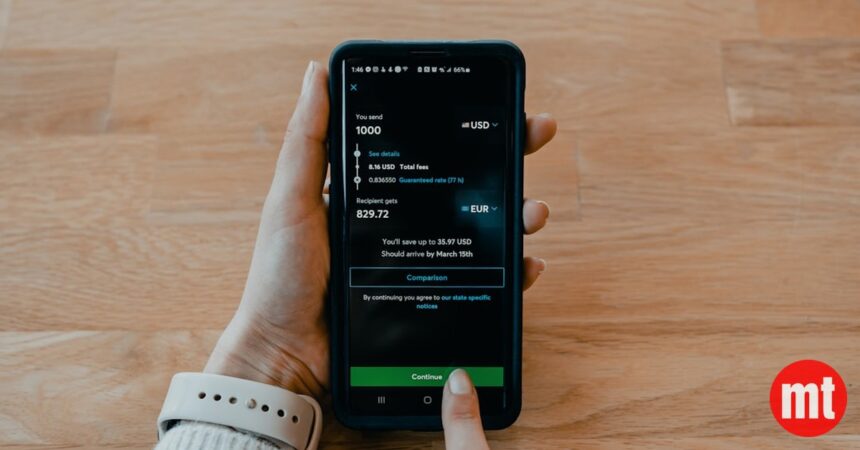
India’s mobile number portability completion rate sits at roughly 72 hours on average, while South Korea and the UK clear MNP requests in under 4 hours — a gap that exposes systemic friction in India’s telecom switching infrastructure. As Vi’s subscriber bleed accelerates in 2026, millions of users are initiating number port requests to Jio and Airtel, putting India’s MNP architecture under stress it was never fully designed to handle at this scale.
India vs The World: Mobile Number Portability
- India: Average MNP completion time of 72 hours; TRAI mandates 7-day processing window for intra-circle ports
- UK/South Korea/USA: Sub-4-hour MNP completion; same-day activation standard across all three markets
- Gap to close: 68+ hours in average processing time; estimated 14 million pending Vi port requests as of Q1 2026
- Timeline: TRAI’s proposed real-time MNP framework could bring India to sub-24-hour completion by Q3 2026 if adopted
In This Article
Where India Stands on Mobile Number Portability Today
India processed over 650 million cumulative mobile number portability requests since the system launched in 2011, but the architecture has not kept pace with demand velocity. Vi’s accelerating churn — the operator lost nearly 8 million subscribers in the four quarters through Q4 2026 — is pushing monthly port request volumes to levels that expose bottlenecks in the MNPSP (Mobile Number Portability Service Provider) clearing infrastructure. Intra-circle ports still require a mandatory 7-day waiting period under current TRAI rules, a regulation written for a different competitive era.
Historically, India’s mobile number portability framework prioritized fraud prevention over speed. The dual-MNPSP model — Syniverse handling the north and east while BSNL’s partner covers south and west — creates coordination latency that single-clearinghouse markets avoid entirely. When Vi’s network quality deteriorated significantly through 2026, the port request surge exposed how the existing system processes requests sequentially rather than in parallel batch cycles. Subscribers initiating a Vi-to-Jio or Vi-to-Airtel switch in early 2026 face an experience that analysts at Analysys Mason describe as “operationally antiquated.”

What Global Leaders Are Doing Differently with Number Portability
South Korea’s centralized number portability clearinghouse completes transfers in under two hours, with real-time API handshakes between donor and recipient operators. The UK’s Ofcom mandated a one-business-day mobile number portability standard in 2019, backed by financial penalties for non-compliance that reach £10,000 per day of delay. The United States implemented same-day wireless porting through FCC order in 2003 — and has continued tightening SLAs since. Each of these markets runs a single national clearinghouse, eliminating the inter-MNPSP coordination delay that inflates India’s average completion window by 48 hours or more.
“India’s dual-MNPSP architecture made sense at launch, but the country now needs a unified, API-first clearinghouse to compete with what subscribers in Seoul or London experience as a routine five-minute task.” — Rohan Dhamija, Partner and Head of India and Middle East, Analysys Mason
Why Is Vi’s Subscriber Exodus Straining India’s Port Infrastructure?
Vi’s financial instability — the operator carries over Rs 2.1 lakh crore in debt as of 2026 — has triggered a sustained flight of postpaid and high-ARPU prepaid users toward Jio and Airtel. Mobile number portability volumes from Vi circles spiked 34% year-on-year in Q1 2026, according to TRAI’s provisional data. The problem is structural: when a single operator generates a disproportionate share of outbound requests within a short window, the sequential processing model creates queue backlogs that delay even straightforward transfers by days beyond the regulatory maximum. Recipient operators are also reporting provisioning delays on their end because incoming port volumes exceed scheduled capacity planning cycles.
Jio and Airtel have both responded by expanding their in-store port facilitation teams and launching UPI-linked prepaid plans specifically targeting Vi migrants. Airtel’s “Switch and Save” campaign in Q1 2026 offered three months of free data to porting subscribers who maintained a minimum recharge. Jio countered with an extended welcome validity plan. Neither intervention addresses the underlying mobile number portability processing delay — they simply make the wait more commercially palatable. TRAI’s intervention, when it comes, needs to target the clearinghouse architecture, not the marketing layer.
How Should India Fix Its Mobile Number Portability Framework?
TRAI’s consultation paper on real-time mobile number portability, circulated in late 2026, proposes consolidating the two MNPSPs into a single national entity with an API gateway connecting all licensed operators directly. Analysts at Deloitte India estimate this consolidation could reduce average port completion time to under 24 hours within 18 months of implementation. The regulator should additionally mandate sub-2-hour ports for postpaid subscribers, mirroring UK standards, and introduce a subscriber compensation mechanism — say Rs 50 per day of delay beyond 24 hours — to create operator accountability. Without financial penalties, SLA targets remain aspirational.
India’s Unified Licensing framework and the existing TRAI API integration for KYC verification provide a workable technical foundation. The Digital Communications Infrastructure Promotion Scheme already funds backend telecom infrastructure upgrades; extending its scope to MNPSP modernization is a logical adjacency. DoT should also mandate that recipient operators like Jio and Airtel activate ported numbers within 4 hours of clearinghouse confirmation, closing the last-mile provisioning gap that currently adds another 12 to 18 hours to the subscriber’s wait after the port itself clears. Speed here is a competitive and consumer protection issue simultaneously.
The Mobile Times Verdict
India’s mobile number portability system is processing a stress test it was not built to pass. Vi’s accelerating decline has turned a structural inefficiency into a consumer experience crisis, and the gap between India’s 72-hour average and South Korea’s sub-2-hour benchmark is no longer defensible. TRAI has the regulatory tools and the consultation record to act. A consolidated clearinghouse, mandatory financial penalties for delays, and a sub-24-hour SLA target for mobile number portability are achievable by Q4 2026 — but only if DoT treats this as infrastructure policy, not a consumer grievance footnote.
Sources: COAI ↗ | Ericsson ↗ | GSMA ↗ TRAI Subscriber Data Reports Q1 2026 (Provisional); Analysys Mason India Telecom Competitiveness Index 2026; Deloitte India Telecom Infrastructure Outlook 2026; Ofcom Mobile Porting Standards Review 2026; FCC Wireless Local Number Portability Order; Vi Annual Report FY2026-26 (Provisional); TRAI MNP Real-Time Consultation Paper, November 2026.
People Also Ask
- How long does mobile number portability from Vi to Jio take in India? Under current TRAI rules, intra-circle mobile number portability takes up to 7 working days. In practice, most Vi-to-Jio transfers complete in 3 to 5 days, though port volumes in 2026 have pushed some requests beyond that window in high-demand circles.
- What documents do you need to port your number from Vi to Airtel? You need a valid government-issued photo ID, your existing Vi SIM, and an active UPC code generated by texting PORT to 1900. Airtel requires KYC re-verification at the point of porting, typically completed in-store or via the MyAirtel app.
- Will porting from Vi to Jio affect your current plan or balance? Yes. Any unused prepaid balance on your Vi account is forfeited upon successful porting. Postpaid subscribers should clear outstanding dues before initiating mobile number portability, as pending bills can cause the request to be rejected by Vi’s systems.
—