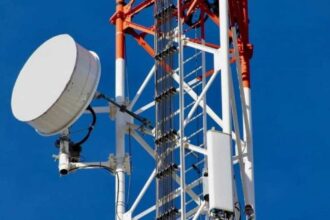



India 5G technology development is at a defining crossroads — and the global telecom body GSMA is sounding the alarm loud enough for New Delhi to hear. With over 120 million active 5G users already on Indian networks, the stakes for missing the next wave of advanced 5G innovation have never been higher. Staying on the sidelines in 2026 is simply not an option the world’s largest telecom market can afford.
Quick Specs & Highlights
- India crossed 120 million 5G subscribers by early 2026, fastest ramp in Asia-Pacific
- GSMA warns passive stance could cost India its leadership position in next-gen spectrum and standards
- Advanced 5G features — network slicing, RedCap, 5G-Advanced — now being deployed by rivals South Korea and China
- GSMA’s APAC policy summit in 2026 formally tabled India’s role in global 5G standard-setting bodies
What Makes India 5G Technology Development a Global Priority Right Now
India 5G technology development has matured far beyond simple rollout numbers. GSMA’s 2026 assessment highlights that the country’s sheer subscriber scale — combined with a uniquely price-sensitive, high-volume data market — gives India unmatched leverage in shaping how 5G-Advanced standards evolve globally. Technologies like network slicing, Reduced Capability (RedCap) IoT devices, and AI-native radio access networks are being standardised now. Without active Indian participation in 3GPP and ITU working groups, the country risks adopting frameworks built for other markets entirely.
Why Is India 5G Technology Development Critical for India in 2026?
India 5G technology development faces direct competitive pressure from China, South Korea, and Japan — nations that are not just deploying 5G but writing the rulebook for 5G-Advanced, also known as Release 18 and beyond. China alone filed over 40% of 5G standard contributions at the last 3GPP meeting. South Korea’s carriers are already trialling 10 Gbps peak speeds using advanced beamforming. India’s domestic vendors, including government-backed TCS and Tejas Networks, have the engineering depth to compete — but need policy momentum and R&D investment to match global peers in 2026.
For Indian consumers, the consequences are tangible and immediate. Passive observation means Indian operators will licence rather than own the intellectual property powering future smartphones, factories, and connected health devices. That translates into higher royalty costs passed down to subscribers and weaker negotiating power for spectrum-efficient, affordable 5G plans. Enterprises building Industry 4.0 factories and smart agriculture solutions on private 5G networks need standards that reflect Indian deployment realities — dense urban corridors, rural connectivity gaps, and multilingual edge computing needs.
“India’s market size is an argument in itself — no global 5G standard can claim true universality without Indian engineers and regulators at the table shaping it from day one.” — Senior APAC Telecom Analyst, GSMA Intelligence
Availability & Verdict
India 5G technology development now demands a clear policy response — not just from operators like Reliance Jio and Airtel, but from DoT, TRAI, and India’s standardisation body TSDSI. GSMA’s call to action in 2026 is unambiguous: fund R&D, seat Indian engineers inside global standards bodies, and fast-track spectrum for 5G-Advanced trials. Our verdict — India has the talent, the market, and the moment. The only missing ingredient is urgency. Miss this window, and catching up will cost far more than leading would have.
Sources: ITU ↗ | Ericsson ↗ | TRAI ↗ TelecomTalk — GSMA Says India Cannot Afford to Stay a Passive Observer in Advanced 5G Technologies
People Also Ask
- What is the current status of India 5G technology development in 2026? India has surpassed 120 million 5G subscribers in 2026, with Jio and Airtel leading nationwide rollouts. However, GSMA warns that active participation in global standard-setting is still lagging behind China and South Korea significantly.
- Why does GSMA say India cannot be a passive observer in 5G? GSMA argues India’s massive subscriber base and engineering talent give it the leverage to shape 5G-Advanced standards. Staying passive means adopting foreign-designed frameworks, paying higher IP royalties, and losing industrial competitiveness in the long run.
- How can India strengthen its role in global 5G technology development going forward? India should increase R&D funding, embed TSDSI engineers in 3GPP and ITU working groups, and accelerate 5G-Advanced spectrum trials. Public-private partnerships between DoT, Jio, Airtel, and homegrown vendors like Tejas Networks are considered the fastest viable path.